Understand how sound moves in an enclosed area and use appropriate keywords throughout the article.
Wooden Acoustic Panels: Solve Your Sound Problems and Love Your Space
The Symphony of Silence: Why Your Space Needs Acoustic Treatment
We’ve all been there: a conversation drowned out by echoes, a favorite song rendered muddy by reverberation, a movie night ruined by distracting noise. Unwanted sound reflections bouncing around a room can transform enjoyable experiences into frustrating ones. But there’s a solution that’s as beautiful as it is effective: wooden acoustic panels.
Understanding Sound: Absorption, Diffusion, and the Importance of Balance
Before we dive into the magic of wooden acoustic panels, let’s explore the fundamentals of sound and how it behaves in enclosed spaces. When sound waves encounter a surface, they can be absorbed, reflected, or diffused. The ideal acoustic environment strikes a balance between these three elements.
Sound Absorption: Absorption occurs when a material converts sound energy into heat, effectively reducing the amplitude of sound waves. Highly absorbent materials like fiberglass insulation are effective at reducing reverberation but can lead to a “dead” sounding room.
Sound Diffusion: Diffusion scatters sound waves in multiple directions, creating a more even and natural sound field. Diffusers prevent echoes and standing waves without completely eliminating reverberation, contributing to a lively and spacious sound. Think of a pebble dropped in a pond creating ripples spreading outwards.
Reflection: Reflections are simply sound waves bouncing off surfaces. Too many untreated reflective surfaces can create unwanted echoes, comb filtering effects, and a general sense of acoustic chaos.
The Natural Advantage: Why Choose Wooden Acoustic Panels?
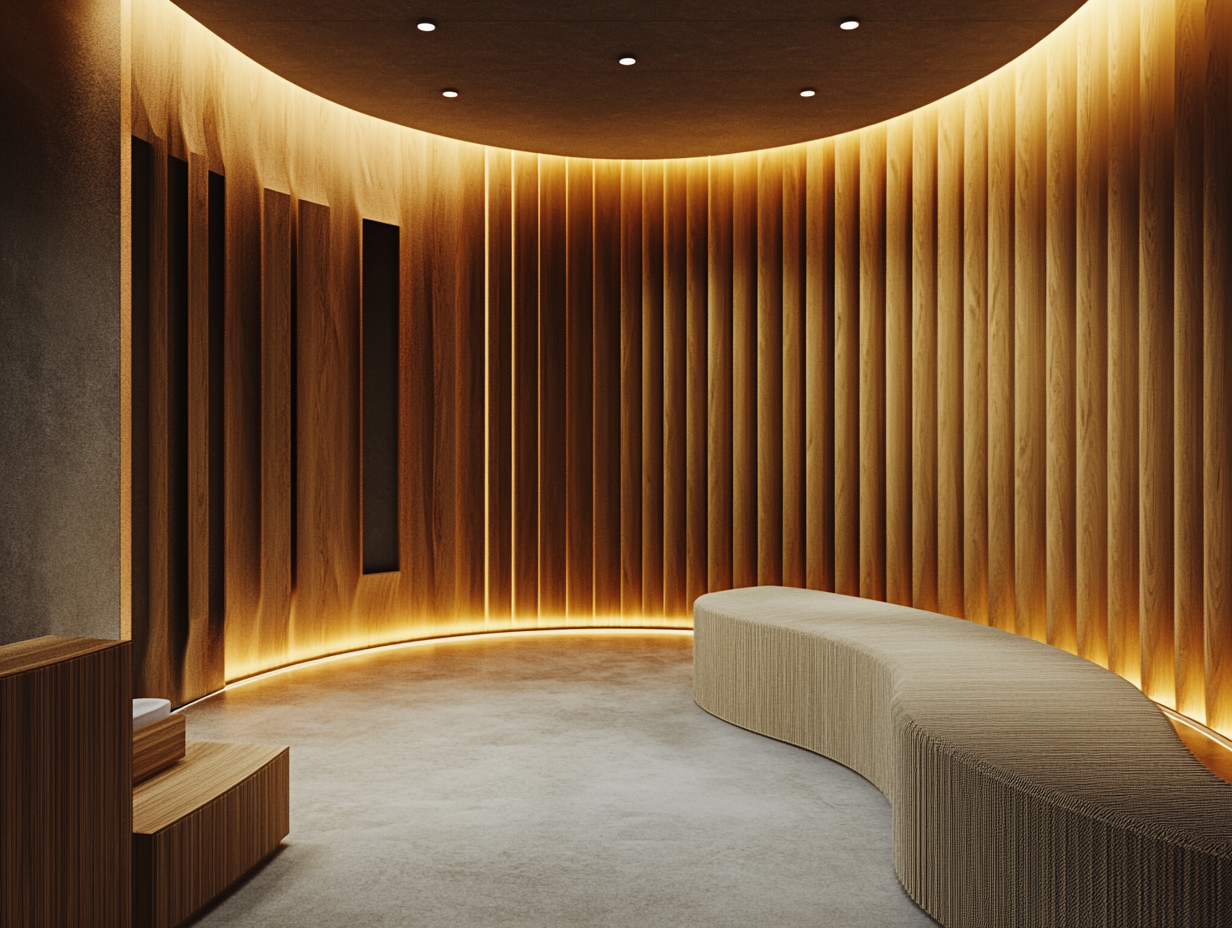
Wooden acoustic panels offer a unique combination of sound absorption and diffusion, making them an excellent choice for a wide range of applications. They also bring a natural warmth and aesthetic appeal that synthetic materials often lack. Here’s why wood stands out:
Aesthetic Versatility: Wooden panels are available in a variety of wood species, finishes, and designs, allowing you to seamlessly integrate acoustic treatment into any interior décor. From rustic reclaimed wood to sleek, modern veneers, there’s a wooden panel to match your style.
Balanced Acoustic Performance: The density and structure of wood provide a degree of sound absorption, particularly at mid and high frequencies. Furthermore, strategically designed wooden panels can incorporate diffusing elements, offering a more balanced acoustic solution than purely absorptive materials.
Sustainability: Choosing wooden panels from sustainably managed forests supports responsible forestry practices and reduces your environmental impact. Many manufacturers offer panels made from recycled or reclaimed wood.
Durability: Properly treated wood is a durable and long-lasting material, ensuring that your acoustic investment will stand the test of time.
Where to Use Wooden Acoustic Panels: Transforming Spaces, One Panel at a Time
Wooden acoustic panels are a versatile solution for improving sound quality in a variety of environments:
Home Theaters: Create an immersive cinematic experience by controlling reflections and reducing reverberation for clear dialogue and impactful sound effects.
Recording Studios: Achieve accurate and pristine recordings by minimizing unwanted room reflections and creating a controlled acoustic environment.
Offices: Reduce distracting noise levels in open-plan offices and conference rooms, improving focus and productivity.
Restaurants and Bars: Create a more pleasant dining experience by reducing background noise and improving speech intelligibility.
Living Rooms and Bedrooms: Enhance your listening experience and create a more relaxing atmosphere by reducing echoes and improving overall sound quality.
Educational Institutions: Improve speech clarity in classrooms and lecture halls, enhancing the learning environment.
Choosing the Right Wooden Acoustic Panels: Factors to Consider
Selecting the right wooden acoustic panels for your space requires careful consideration of several factors:
Panel Size and Thickness: Larger and thicker panels generally provide greater sound absorption.
Wood Species and Density: Different wood species have varying densities, affecting their acoustic properties.
Surface Design: Perforated, slotted, or textured surfaces can enhance sound diffusion.
Mounting Method: The mounting method affects the panel’s acoustic performance. Air gaps behind the panel can improve low-frequency absorption.
Room Size and Shape: The size and shape of your room will influence the number and placement of panels needed.
Installation and Maintenance: A Simple Process
Most wooden acoustic panels are designed for easy installation, often using simple mounting systems. Regular dusting and occasional cleaning with a damp cloth will help maintain their appearance and performance.
Invest in Sound, Invest in Your Space
Wooden acoustic panels are more than just a sound treatment solution; they’re an investment in the comfort, functionality, and aesthetics of your space. By controlling sound reflections, reducing noise levels, and adding a touch of natural beauty, wooden panels can transform any environment into a haven of peace and tranquility. Explore our wide selection of wooden acoustic panels and start experiencing the difference today!